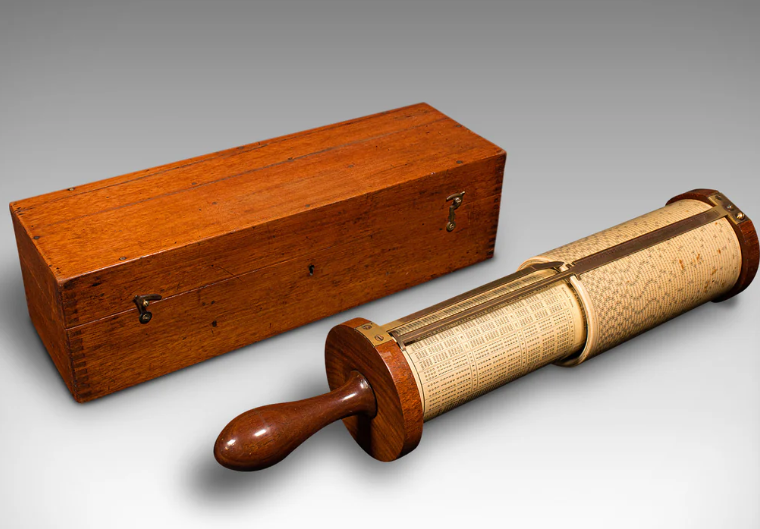
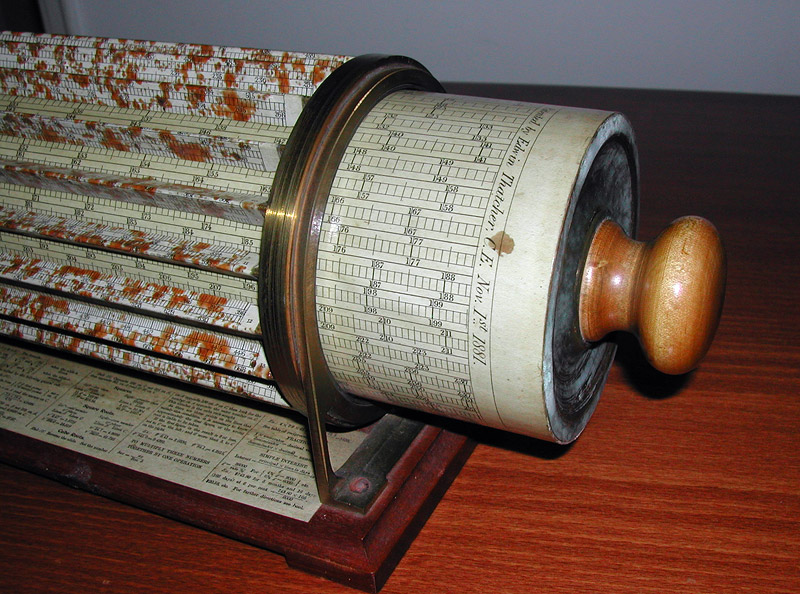
Cylindrical slide rules exist in two designs – one with a logarithmic scale wrapped in a spiral around the outside of a cylinder (such as the Otis King and Fuller’s rule), the other in the form of bars (Thatcher). Both types provide a longer scale than a straight or circular rule, which can lead to greater precision.
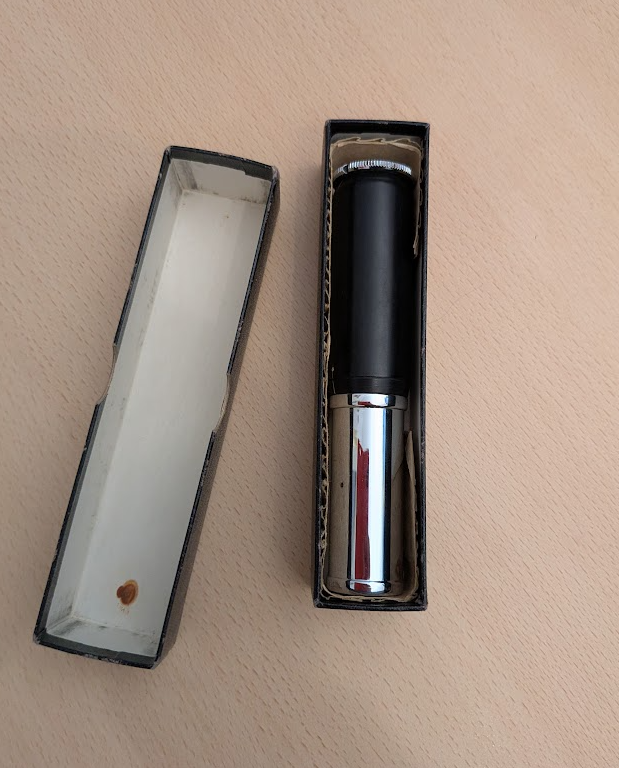
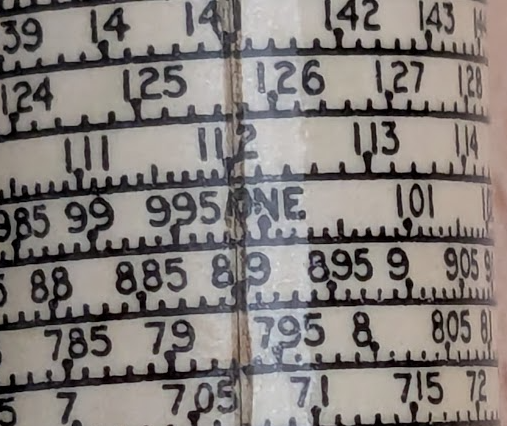
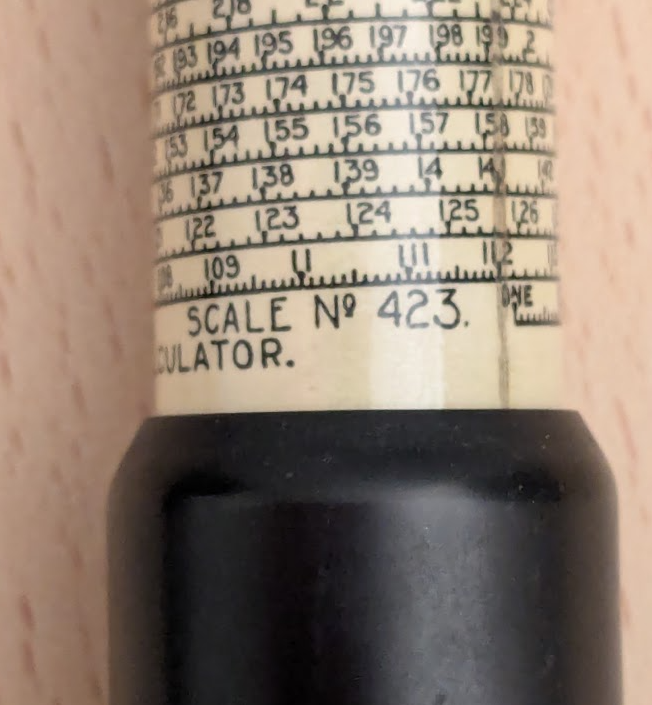
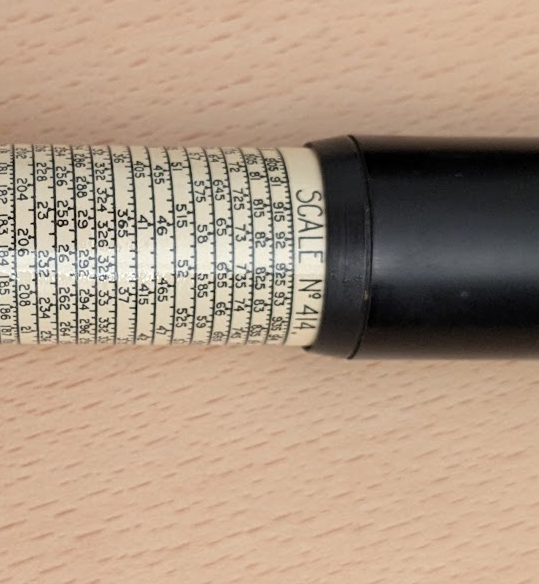
This Otis King calculator comprises a holder (gripped by hand) around which a 66 inch long logarithmic scale (labled No. 414) is wound. The movable cylinder carries two scales in series (labled No. 423) which are identical in all respects to Scale 414. The point at which these two scales meet half-way up the cylinder is denoted by yhe word ‘One’.
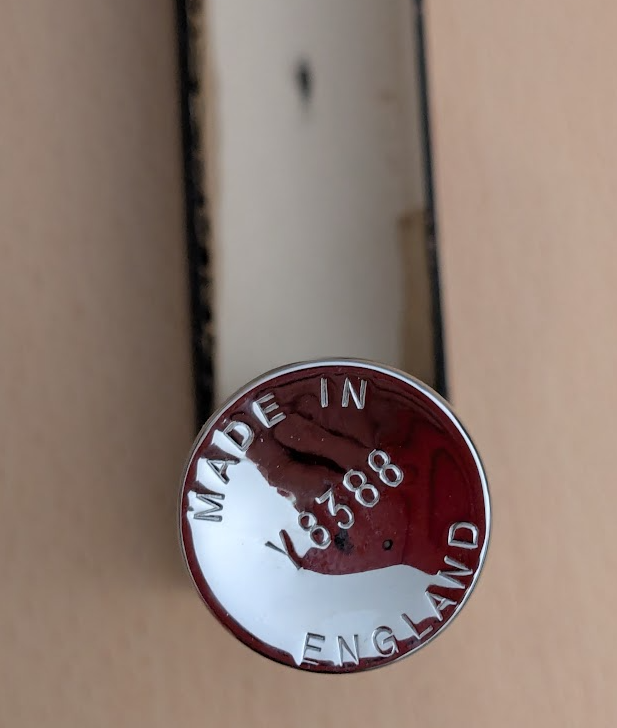
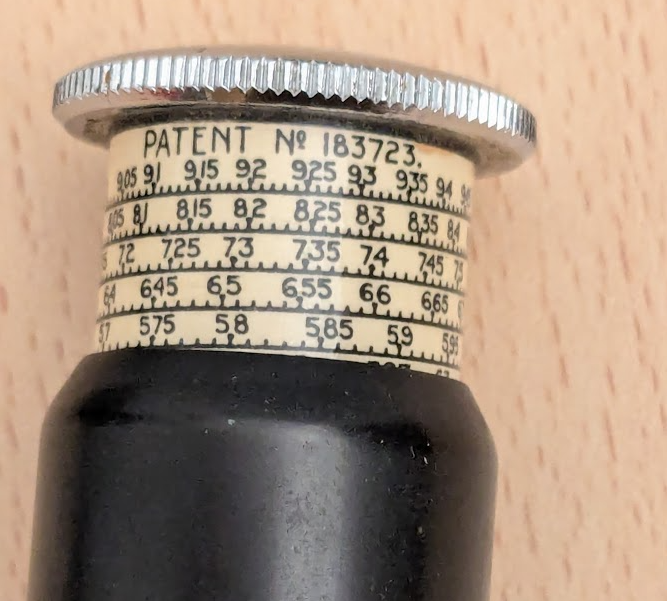
The Model K has a serial number Y8388 at the end of the holder, which indicates a production date later than 1971, and is covered by Patent 183723 granted in 1922. A guide to its use is available here. A second manual includes the use of Model L for finding the log of any number.
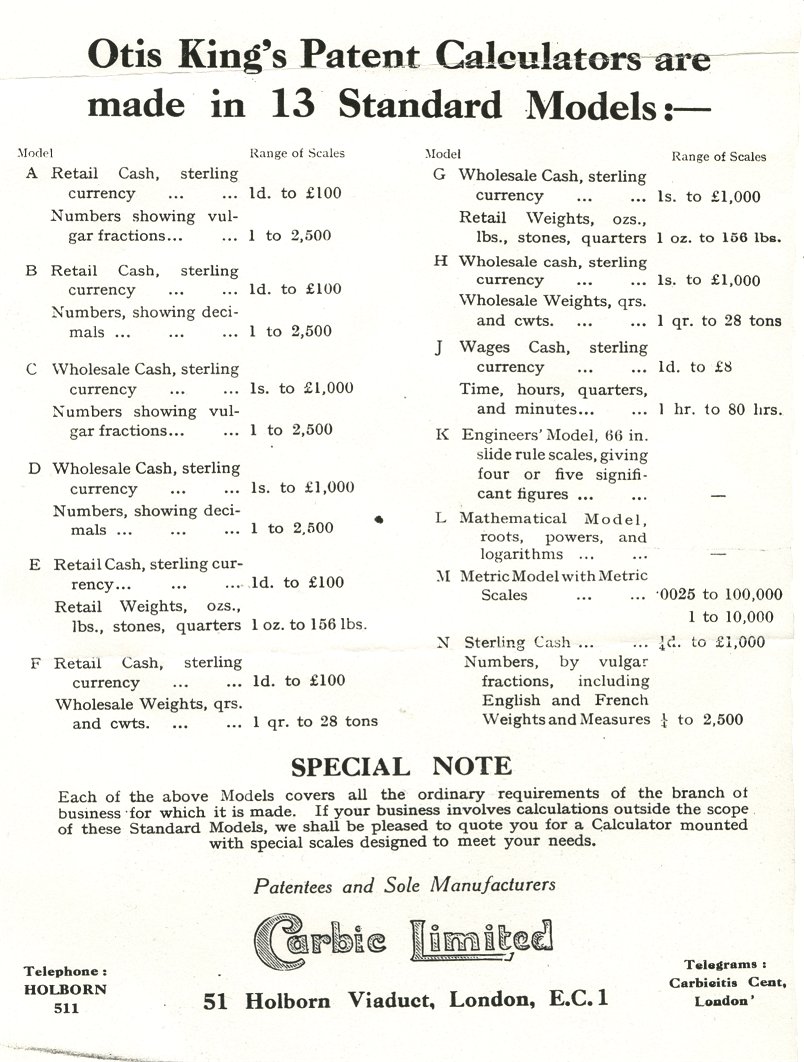
Invented by Otis King, the calculator was manufactured by Carbic Ltd from about 1922 to about 1972 and was available as different models each designed to meet specific arithmetic requirements.
Sources of information
Cylindrical slide rules – an overview in the Smithsonian Museum
History of Computing – slide rules and other historical computing artifacts
Otis King’s Pocket Calculator, Model K
Otis King – Conclusions? from The Journal of the Oughtred Society Vol 5 No 2 October 1996
The Oughtred Society – A Society dedicated to the preservation and history of slide rules and other calculating instruments.